Record Less, Care More and Stop Losing Capacity to Admin That Was Never a Good Use of Anyones Time: Practical AI tools Northern Ireland care providers, registered managers and social care teams can put to work right now
Care providers across Northern Ireland are spending more time on paperwork than they are on the people they exist to support. That is not a technology problem. It is a fixable one.
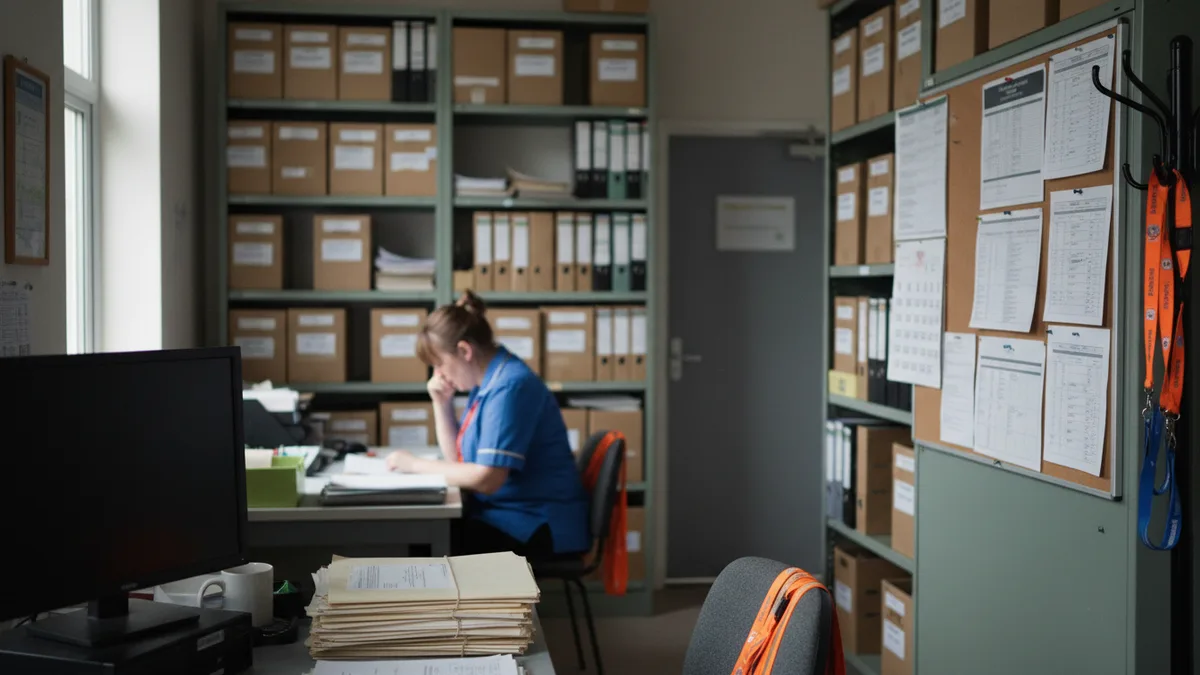
Care and social care organisations in Northern Ireland carry an administrative load that would floor most businesses. Rota management, care plans, incident reports, medication records, staff training logs, CQC and RQIA compliance files, safeguarding documentation, funding applications, contract monitoring returns. Every one of those tasks is necessary. Most of them are done manually, by skilled people who trained to look after other people, not to fill in forms.
The result is predictable. Registered managers spend Sunday evenings catching up on reports. Senior carers stay late writing up visits. Co-ordinators spend half their week chasing paper rather than supporting staff. The people doing this work are not inefficient. They are just carrying a weight that was designed for a different era, and it is costing organisations real capacity at a time when capacity is the one thing nobody has spare.
What the admin burden actually looks like on the ground
Take a medium-sized domiciliary care provider operating across, say, Antrim and Newtownabbey. Forty care workers. Four hundred service users. The registered manager and her two coordinators are responsible for compliance documentation, staff supervision records, incident and accident logs, daily care notes, funding reviews and the monthly monitoring return for the Health and Social Care Trust. None of that is optional. All of it is time-consuming.
The care notes alone present a problem. They arrive in different formats: typed on a mobile app, handwritten on paper, dictated by phone. Turning those into structured records, spotting patterns, flagging anything that might indicate a change in a service user's condition, that is work that takes hours every week. It is also the kind of work where things get missed when people are tired or pressed for time.
This is not a complaint about the system. It is a description of what a lot of care organisations across Northern Ireland are actually dealing with right now, and it is exactly the kind of environment where the right AI application, built carefully on your own data, can make a concrete difference.
Why this matters specifically for Northern Ireland
Northern Ireland's care sector has its own particular pressures. RQIA inspection requirements, Trust contract monitoring, the Supporting People programme, the Domiciliary Care Framework: each of these places specific documentation demands on providers. Organisations that work across both community and residential settings often find themselves maintaining parallel compliance processes that overlap but never quite align.
There is also a workforce dimension that is specific to here. Recruitment has been difficult for several years. Retaining experienced staff, particularly senior carers and registered managers, depends partly on whether the job is manageable. When a good co-ordinator leaves because the admin has become unrelenting, the cost is not just a recruitment fee. It is months of institutional knowledge walking out the door.
Private AI does not fix a staffing crisis on its own. But if it removes two or three hours of avoidable paperwork from a registered manager's week, that matters. If it means a co-ordinator can answer a Trust query in ten minutes rather than an afternoon, that matters too. Small gains in a sector running at this kind of pressure add up quickly.
The specific tasks where AI earns its place
Document and knowledge search is the most immediately useful application for most care organisations. Policies, procedures, training records, care plans, previous inspection reports: these exist in every organisation, usually spread across shared drives, email folders, paper files and whatever care management system is in use. Finding a specific piece of information quickly, particularly during an inspection or a safeguarding inquiry, is harder than it should be. A private AI system that can search across all of those sources and surface the right document in seconds is genuinely useful, and it does not require any of that data to leave your building.
Care note analysis and pattern detection is the next step. If a system can read structured care notes and flag changes in a service user's reported mood, mobility, appetite or behaviour over time, that is a clinical governance tool as much as an efficiency one. It does not replace professional judgement. It supports it by making sure the information is visible rather than buried in a folder nobody has time to read.
Compliance and reporting automation is where registered managers and administrators tend to feel the most immediate relief. Monthly monitoring returns, staff training matrices, incident log summaries: these follow predictable formats and draw on data that already exists somewhere in the organisation. An AI application that drafts those documents from your own records, ready for a human to review and sign off, can save several hours per report. Over a year, across a mid-sized provider, that is a meaningful number.
Rota and staff allocation support is more complex but worth mentioning. Matching staff availability, skills, continuity-of-care preferences and travel distances is a genuine optimisation problem. AI can help coordinators make better decisions faster, particularly when last-minute changes create a cascade of knock-on effects that currently get resolved by whoever picks up the phone first.
The privacy point is not a small thing
Care data is among the most sensitive information any organisation holds. It covers health conditions, mental capacity, safeguarding histories, medication and personal circumstances. The idea of feeding any of that into a public AI tool should make any registered manager uncomfortable, and rightly so. GDPR obligations, RQIA expectations and basic duty of care all point in the same direction: this data does not belong in a system you do not control.
Private AI means the platform runs inside your environment, whether that is on-site infrastructure, a private cloud instance or a secure hybrid arrangement. The data stays where it belongs. It is not used to train anyone else's models. It is not accessible to a public service. When an inspector asks how you manage data security, the answer is straightforward.
This is not a theoretical distinction. Several care providers have already moved away from certain consumer-grade AI tools after becoming aware of how those tools handle the content they process. Building on a private platform from the start avoids that problem entirely.
Where to start if you are a care provider
The wrong way to approach this is to try to solve everything at once. Care organisations that have had good results with AI have almost always started with one process, measured the improvement, and built from there. That is not timidity. It is how you demonstrate value to trustees, commissioners and inspection bodies before committing to a wider programme.
The most common starting point is document search and retrieval, simply because the pain is universal and the benefit is immediate. If your team currently spends time hunting for policies, previous inspection responses or specific care plan entries, that is a sensible first application. It requires connecting the AI platform to your existing file storage, whether that is a shared drive, a care management system or a combination of both, and it does not require changing how staff work day to day.
From there, care note summarisation and pattern flagging is usually the next step that generates the most interest from clinical and operational managers. It is also the step where having a properly scoped, carefully implemented system matters most, because the stakes are higher.
Before any of that, it is worth spending time mapping out where the actual bottlenecks are. Not where people assume they are, but where time genuinely disappears when you track it honestly. That is what Verona's AI Discovery process is designed to surface: a clear, costed picture of which applications would make the biggest difference, in which order, for your specific organisation.
Could your team get hours back every week?
Book a free 30-minute conversation with Verona AI. We will look at one specific process in your organisation and tell you honestly whether a private AI system built on your own data could make a measurable difference.
Book a free consultationMore from the Verona AI blog

Charge More, Write Less and Stop Losing Fees to Admin That Eats Half Your Working Week: Practical AI tools Northern Ireland accountants, practice managers and finance teams can put to work right now
Northern Ireland accountants are losing billable time to repeatable admin. Private AI can change that without putting client data at risk. Here is how.
Plan Better, Waste Less and Stop Losing Margin to a Factory Floor That Runs on Instinct: Practical AI tools Northern Ireland manufacturers, production planners and operations managers can put to work right now
Northern Ireland manufacturers are losing margin to poor planning and disconnected data. Here is how private AI fixes that without exposing your data.

Know What You Have, Know What You Need and Stop Losing Margin to Stock That Sits or Orders That Slip: Practical AI tools Northern Ireland wholesalers and distributors can put to work right now
Northern Ireland wholesalers: see how private AI connects your warehouse, ERP and orders to cut stock errors, speed fulfilment and protect margin.