The AI Giving People Back Their Senses: Real stories of artificial intelligence restoring sight and hearing around the world, and what they mean closer to home
Sometimes the most remarkable things happen quietly, in a hospital room or a kitchen table, when someone experiences the world in a way they thought was gone forever. AI is making some of those moments possible.
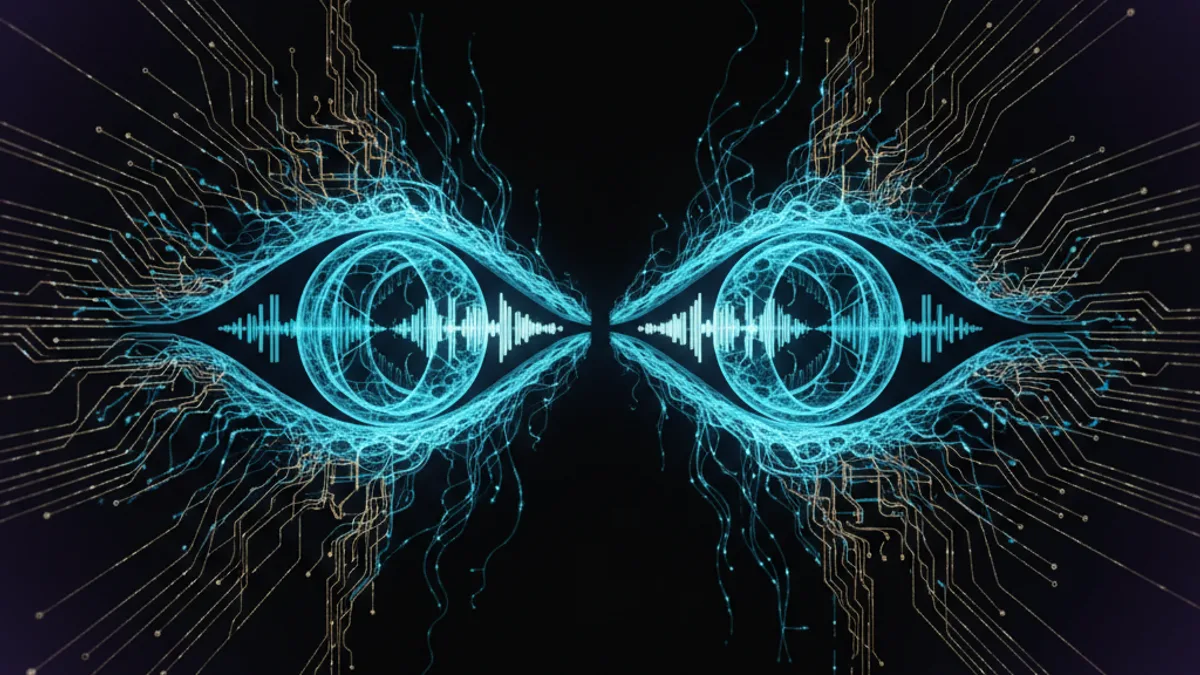
It is easy to feel a bit worn down by AI news. The hype, the warnings, the breathless headlines about robots taking jobs or algorithms going rogue. But spend a little time looking at what is actually happening at the quieter end of the field, in research labs, community clinics and university hospitals, and a different picture emerges. One where the technology is doing something genuinely useful: giving people back capabilities they had lost, or never had at all.
This Friday we are looking at some of those stories. They come from different corners of the world, involve different conditions and different technologies, but they share something in common. They are grounded, peer-reviewed and real. And for anyone working in health, social care or community services here in Northern Ireland, they carry a practical message worth sitting with.
Seeing again, with a little help from a neural network
In 2025 a team at the University of Sydney, working with clinical partners across Australia, published results from a trial of an AI-powered retinal implant system that goes well beyond anything available a decade ago. Earlier implants could offer patients a rough sense of light and dark, maybe the outline of a doorframe. Useful, but limited. The new system uses a convolutional neural network trained on millions of retinal images to interpret and translate visual data in a way that maps far more closely to how a healthy eye processes contrast, edge and movement.
Patients in the trial, most of whom had advanced retinitis pigmentosa, reported being able to read large-print text, recognise faces at close range and, in one case that got a lot of attention in the press, identify the colour of flowers in a garden for the first time in eleven years. That last detail sounds small. It is not small. It is the kind of thing that changes how a person moves through the world.
The system is not yet widely available commercially, and the surgical procedure is still complex and costly. But the trajectory is clear. What required a research hospital in 2025 will likely be a regional clinic procedure by the early 2030s, and the AI component is a big reason why the timeline has compressed so dramatically.
Hearing the conversation again
Hearing loss affects around 1.5 billion people globally, according to the World Health Organisation, and a significant proportion of those are of working age. Standard hearing aids have improved a lot over the past two decades, but they have always struggled with one specific problem: noisy environments. A busy restaurant, a school canteen, a busy open-plan office. The aids amplify everything, which means the person wearing them often hears a wall of noise rather than the conversation they are trying to follow.
A startup out of Copenhagen called Audeara, working alongside research groups at the Technical University of Denmark, has developed a deep-learning model that does something impressively specific. It learns the acoustic signature of the wearer's most common listening environments over a period of weeks, then builds a personalised filter that suppresses background noise with a precision that generic algorithms cannot match. The difference in user trials was striking. Participants reported a 60 percent improvement in speech comprehension in noisy settings compared to their previous devices.
For someone who has been gradually withdrawing from social situations because following a conversation felt exhausting, that kind of improvement is not a minor convenience. It is a route back into ordinary life. Several participants in the trial described returning to activities they had quietly stopped doing, including going to their local pub quiz, attending a grandchild's school play, and staying at the dinner table rather than excusing themselves early.
AI that reads the room for people with autism
One of the more thoughtful applications to emerge recently comes from a project run jointly by MIT Media Lab and a network of schools in Portugal and Canada. The system is called EmoAssist, and it uses a small wearable camera combined with an on-device AI model to help autistic young people interpret facial expressions and social cues in real time.
The camera feeds a continuous image stream to the model, which identifies the emotional state of the person being looked at and delivers a gentle audio cue through a discreet earpiece. A soft tone for a neutral expression, a warm tone for happiness, a different pattern for concern or frustration. The idea is not to replace social learning but to reduce the cognitive load of decoding expressions in the moment, giving the wearer more mental bandwidth to engage with what is actually being said.
Early results from school trials have been encouraging. Teachers reported that students using the system showed more sustained engagement in group conversations and fewer incidents of social withdrawal during unstructured time. Parents described their children coming home less exhausted after a school day. That last point matters enormously. Autistic people often describe the effort of masking and interpreting social situations as deeply draining. Anything that reduces that drain has a real impact on quality of life, not just during the school day but in the hours that follow.
Why this matters for Northern Ireland
Northern Ireland has a higher-than-average rate of disability benefit claimants relative to the rest of the UK, and the Health and Social Care system here is under sustained pressure. The Western Trust, the Belfast Trust and their counterparts are all dealing with waiting lists, staff shortages and a growing demand for community-based care that keeps people out of hospital and in their own homes.
The technologies described above are not science fiction. They are products and systems that exist today, some already in limited clinical use, others moving through regulatory approval. The question for Northern Ireland is not whether these tools will arrive here, but whether the health service, the social care sector and the voluntary organisations working with disabled people are positioned to adopt them thoughtfully when they do.
There is already good work happening. Queen's University Belfast has an active research group in medical imaging AI, and Ulster University has published in the area of assistive technology. The challenge is often the gap between research and frontline deployment, getting something out of a lab and into the hands of a community nurse or a special educational needs coordinator. That gap is where local knowledge, practical implementation experience and a willingness to run small pilots become genuinely valuable.
Where to start if you work in this space
If you are working in healthcare, social care, special education or disability services in Northern Ireland and you are curious about what AI could do for the people you support, the most useful first step is probably not a technology audit. It is a conversation about the specific friction points in your day-to-day work.
Where are your staff spending time on tasks that feel repetitive and low-value? Where are the people you support falling through gaps because information is not reaching the right person at the right time? Where are decisions being made on incomplete data because pulling the complete picture together takes too long? Those are the places where AI tends to have its most immediate and practical impact.
You do not need a large budget or a dedicated technology team to begin. Some of the most effective early applications are modest: a well-designed AI triage tool that helps a community nurse prioritise home visits, a simple document summarisation system that saves a social worker forty minutes of reading per day, a scheduling assistant that reduces missed appointments. Small things, done well, that free up human attention for the parts of the job that only humans can do.
The bigger picture
There is a version of the AI conversation that is all about efficiency, cost reduction and competitive advantage. That version is not wrong, exactly, but it is incomplete. The stories we have looked at today are a reminder that the technology also has a deeply human dimension.
The person who can hear their grandchild's voice clearly at a birthday party. The teenager who walks into a classroom with a little less dread. The woman who can name the colour of the roses in her garden again. These outcomes do not happen by accident. They happen because researchers, clinicians, engineers and carers worked carefully and patiently to apply a powerful tool to a real human need.
That same care and patience is available to organisations here. The technology is not the hard part. The hard part is understanding the need clearly enough to apply it well, and that is something that takes local knowledge, honest conversation and a willingness to start small and learn.
Could AI make a real difference for your organisation?
If you work in healthcare, social care or any sector where better information means better outcomes, we would love to have a conversation. Reach out to Verona AI for a free, no-pressure consultation.
Book a free consultationMore from the Verona AI blog
The Intelligent Supply Chain: How AI is Transforming Logistics and Transport in Northern Ireland
From route optimisation to smarter warehouses and cross-border customs, AI is helping Northern Ireland's logistics firms cut costs and move faster.

The Quiet Revolution on the Factory Floor: How AI is Reshaping Manufacturing in Northern Ireland
From predictive maintenance to computer-vision quality control, AI is quietly changing how Northern Ireland's manufacturers compete, and how to start without betting the factory.
The AI Stories That Are Changing Lives
From restoring sight in rural India to protecting rainforests in Costa Rica, the AI breakthroughs reminding us that technology, at its best, is a force for extraordinary good.